Also available in English below
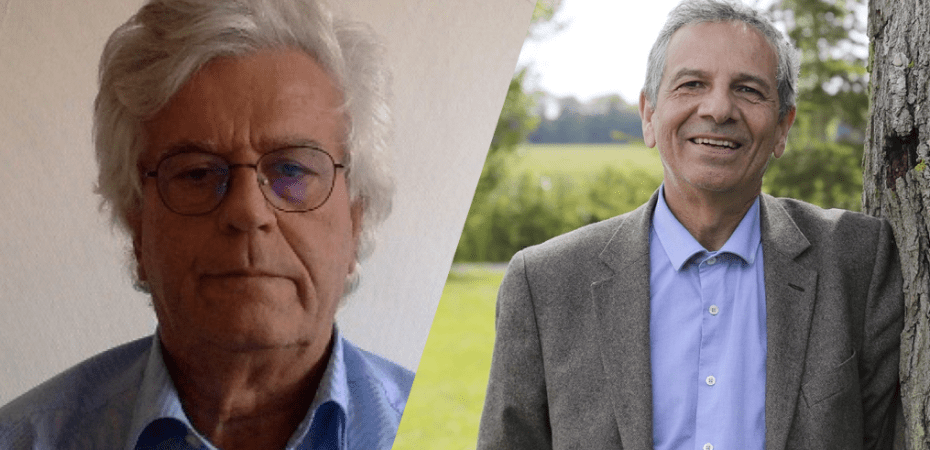
Les dirigeants français et européens se focalisent sur des priorités complètement dépassées au lieu d’engager une véritable transformation de notre système économique à l’heure du changement climatique, estiment les économistes Ollivier Bodin et Alain Grandjean, dans une tribune au « Monde ».
Lire la tribune sur le site lemonde.fr
Pour aller plus loin : https://greentervention.org/2023/06/19/eng-fr-regles-budgetaires-pourquoi-et-comment-ameliorer-la-proposition-de-la-commission-europeenne/
« Budget rules leave no flexibility for adapting to climate change »
French and European leaders are focusing on completely outdated priorities instead of undertaking a genuine transformation of our economic system in the face of climate change, argue economists Ollivier Bodin and Alain Grandjean in an op-ed for « Le Monde ».
The French Finance Minister, Bruno Lemaire, was afraid that Standard and Poor’s might downgrade the French government’s financial rating. He just rejected one of the recommendations of the Pisani-Ferry report, which was to finance the « investment wall » needed to achieve our climate objectives through additional debt and/or additional taxation. The President of the ECB, Christine Lagarde, still seems to be in favour of continuing to raise interest rates. This will increase the debt burden of public and private actors and reduce their borrowing capacity.
Yet it is clear that inflation has no monetary origin and that solutions must be found in the real economy. The European Commission, under pressure in particular from our German neighbours, is proposing « new » budgetary rules. Yet the proposal will confine the increase in public spending to arbitrary accounting limits that are surreal for anyone familiar with the reality of European countries’ budgets. These rules leave no flexibility for increasing vital spending to reduce CO2 emissions, thereby reducing our dependence on largely imported fossil fuels and adapting to ongoing climate change.
In short, the monetary and budgetary levers that should be massively mobilised in the face of an existential crisis are not only not being used, but worse still, will make it even more difficult to implement solutions. Rising interest rates will reduce the profitability of energy-efficient renovation of homes and buildings and, more generally, will reduce the profitability of transition investments. Budgetary austerity will reduce the investment capacity of the State and local authorities. It will reduce public support for private operations that need it, in a context where negative externalities, such as CO2 emissions, are heavily under-priced, which does not at all dissuade fossil fuels and their use. It will also obviously lead to a reduction in social benefits, even though it is well established that the transition must be perceived as socially fair.
This situation is not unique to France. By 2026 at the latest, when the Recovery and Resilience Facility – opportunely decided in response to the COVID crisis – is exhausted, investment in transition is likely to have to be scaled back in many countries.
While reductions in greenhouse gas emissions will remain insufficient without a major policy shift, climate change and the ecological crisis require European leaders to show discernment, courage and lucidity. To bring European economic policies into line with the climate emergency and stabilise the euro in the long term, it is not enough to cobble together new budgetary rules while trying desperately to reconcile reality with standards thirty years old. The link between monetary policy, financial regulation, the European budget and national budgets need to be rethought.
At the next Council of European Heads of State and Government at the end of June, will France have the courage to lead a coalition calling for a complete rethink of the fundamentals of European macroeconomic policies?


[…] Retrouvez également la tribune des économistes Ollivier Bodin et Alain Grandjean pour le «&n… […]
J’aimeJ’aime